

Comic foundations: Gotham Central, Naruto, SAGA and more...
The comics that helped shape my writing

Today I’m continuing my retrospective look back at the inspirations behind Tales from the Triverse, which is really an excuse to write about some of my favourite things. I’ve already covered novels and television:


Comics exist alongside television as a format that has always embraced serialisation. As I’ve discussed previously, literature has tended to favour the singular novel over the last century, ignoring its roots in magazine and newspaper serials. Comics have explored a more varied route, one that mixes episodic storytelling (single floppies) with larger, novel-like collections (graphic novels). Comics, unlike novels, can be whatever they want to be. As such, comics are a big influence on my prose fiction.
In fact, I probably should have paid more attention to how comics do it, as I outlined in this debrief late last year:

So! Let’s talk comics.
Gotham Central (2002-2006)
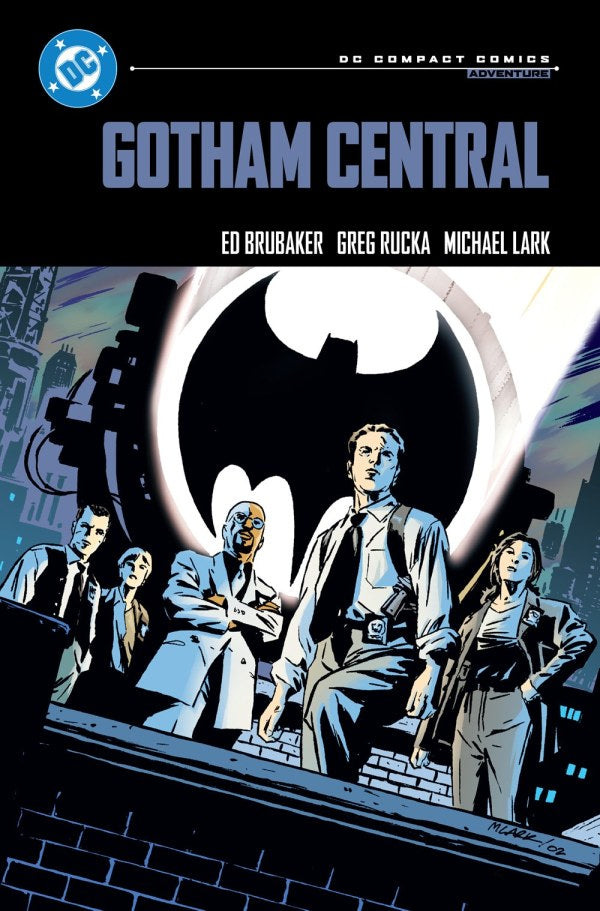
This series by Ed Brubaker and Greg Rucka is the most obvious influence on Triverse. In fact, the first proper story in Triverse (‘The Koth’) directly references the first issue of Gotham Central.
The core premise is that this is a Batman comic in which Batman barely appears. It focuses entirely on the Gotham police department, with officers who are trying to do their job in a corrupt city. Batman’s presence isn’t heroic, instead presented as part of the city’s corruption and general illness. The cops would much prefer Batman wasn’t a factor, always disrupting their investigations and cases and undermining their authority. He often swoops in for the final page of an issue, dramatically upending the story. Batman is presented as an annoying deus ex machina: he’s part of the problem, not the solution.
Tonally, the book finds a clever line whereby it feels like a very grounded, NYPD Blue-style story without avoiding the more arch elements of Batman mythos. This is perfectly encapsulated in that opening issue, which features none other than Mr Freeze:
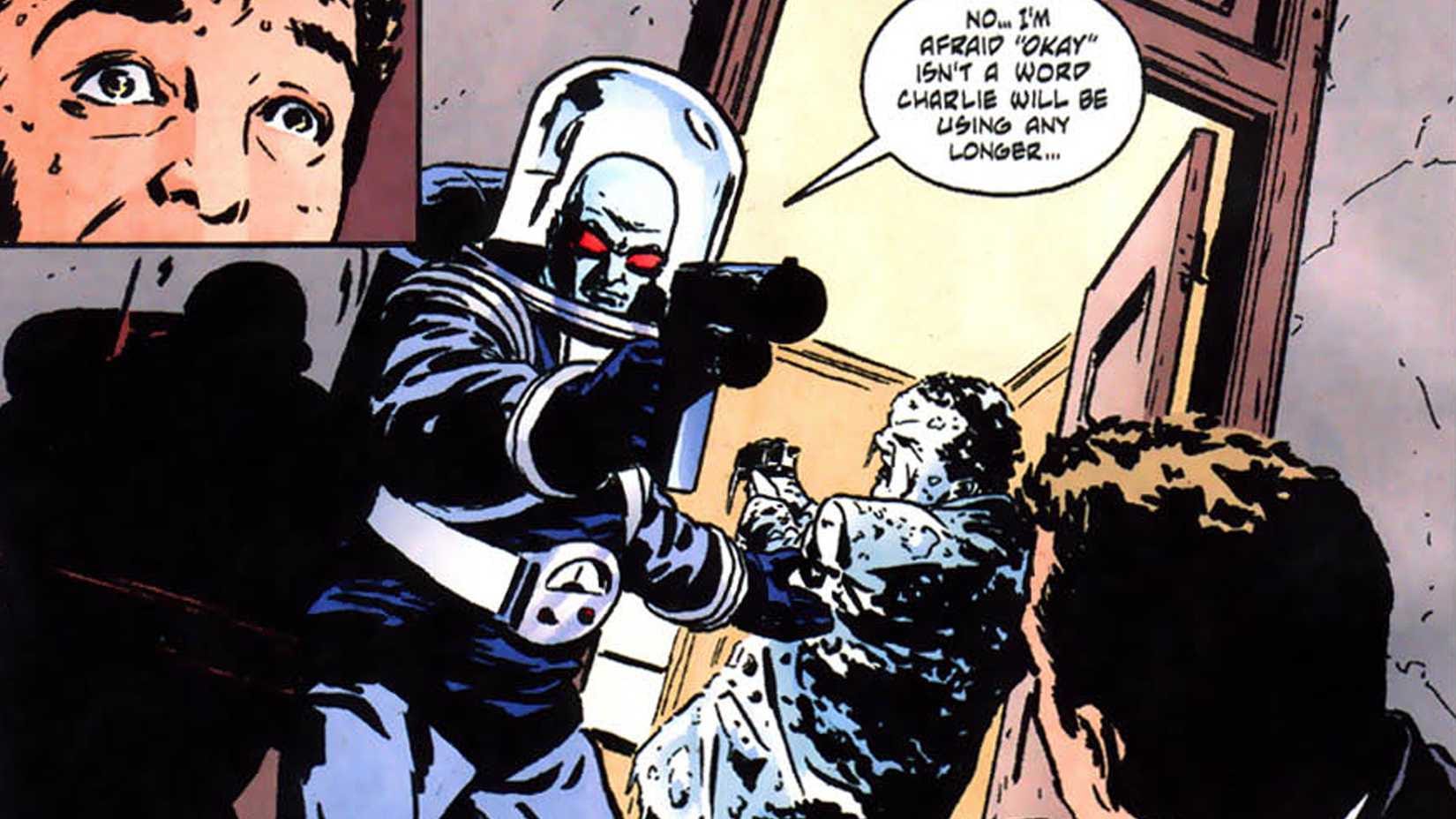
In the early 2000s, the memory of Arnold Schwarzenegger in Batman & Robin was still fresh. Christopher Nolan had yet to reinvent the movie version of Batman. Schwarzenegger aside, ‘Mr Freeze’ is a very silly name. His real name is Victor Fries. He wears a goldfish bowl on his head and is basically obsessed with making everything cold. According to Wikipedia, the character was originally called Mr Zero in the comic, but the 1960s TV show renamed him to ‘Mr Freeze’. The camp is real.
Point is, Mr Freeze is a silly character that can’t be taken seriously.
That’s what I thought, anyway. When two cops go to investigate a domestic disturbance in an apartment, they bust down the door to discover Mr Freeze holed up inside. One of the officers is killed immediately: the freeze gun in Gotham Central isn’t the type you can thaw out from. Freeze proceeds to dismember the frozen cop in front of the other. The entire thing is terrifying and horrific, and is a brilliant lesson in how tone and context can massively shift a story. It’s when the grounded realism of the writing and art style collide violently with the elevated reality of the Batman story universe.
Mr Freeze fighting Batman is not scary. Two ordinary cops bumping into Mr Freeze by accident? That’s scary. It’s a statement of intent from Brubaker and Rucka.
That’s what I wanted to do with ‘The Koth’. In that opening story of Triverse we have two cops investigating a disturbance at an apartment: they bust in and encounter a koth, a dragon-like creature from another dimension, which proceeds to behead one of the cops and leave the other traumatised. It’s not a subtle nod, I admit.

Tales from the Triverse is a chimera, from a genre perspective. It mashes together science fiction, fantasy and crime fiction. Figuring out how to make them all co-exist was a real challenge: Gotham Central showed me how.
Naruto (1999-20214)
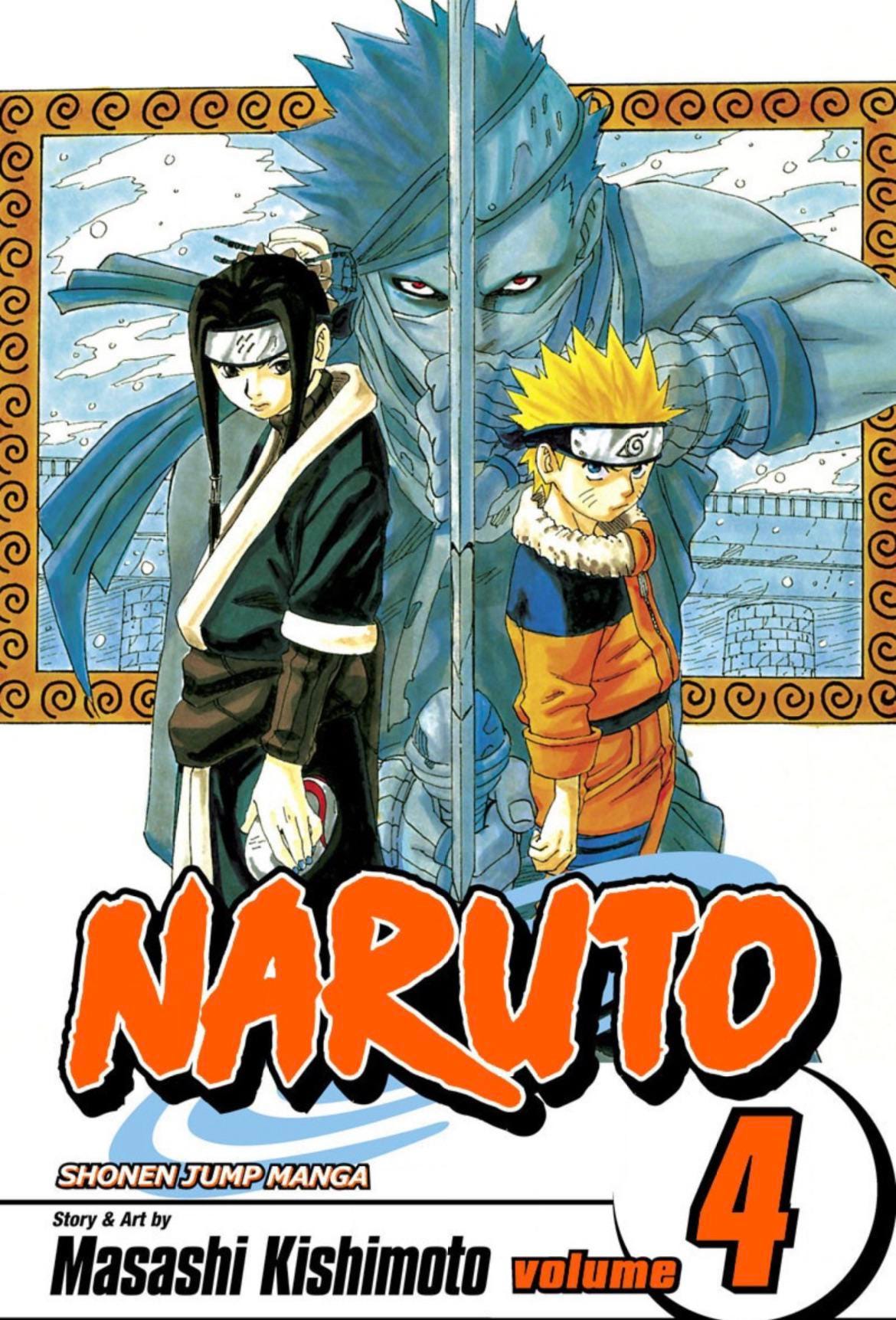
A quick clarification: I’ve not yet read the Naruto manga, but it’s on my list and the first collection is on my to-read pile. I have watched the TV show, and while the adaptation inevitably has differences I’m including this in the ‘comics’ round-up because I’m focusing on the core storytelling rather than anything specific to the anime.
A bit of a cheat, then, but here’s why I’m listing it:
There are three specific aspects of Naruto that played into my larger planning for Triverse. First, there’s the story’s commitment to a long timeline: Naruto might be the centre of the narrative, but it extends off in multiple directions and across generations. Back into the past, as well as into Naruto’s own future (it begins with him as a child, and ends with him as an older, wiser, more mature teen). It has a sprawling construction that could be unwieldy but instead feels like an intricate puzzle box. Seeing all the pieces slot together is immensely satisfying.
The second learning I took from Naruto was to not be afraid of flashbacks and diversions. The structure at the start of season 4 of Triverse involves a five-year time skip, with some of those years then filled in via an extended flashback that lasts most of the season. It’s a bit weird, and I probably wouldn’t have tried it without having experienced Naruto’s highly non-linear, flashback-infused storytelling. It felt like a risk at the time, to diverge from the ‘main’ story to detail Lola’s harrowing experiences, and it was Naruto that convinced me to try it. I suspect it’s a sequence that a sensible editor would have advised me against doing.
Lastly, there’s an exponential scaling up of risk and threat and power in Naruto that repeatedly feels like it must break the story…but never does. Somehow Masashi Kishimoto holds it all together, even as the main characters gain extraordinary, planet-destroying abilities and the action shifts from relatively grounded martial arts to cosmic energy beings. I’m still surprised that it works, and it’s due to the commitment to character motivations and a strong anchoring to the mundane. Even while events become fantastically elevated in the climax of Naruto, it never loses sight of what normality means, or what the heroes are fighting for. They still just want to go to the hot baths. All Naruto really wants to do is go eat some ramen at Ichiraku’s. They become gods, but they never stop being people.
That elevation of scope in the finale heavily influenced Tales from the Triverse. I have specific notes in my planning about certain sequences ‘feeling like Naruto’. I highly doubt I’d have included the story in which literal gods fight an AI megaship with a mountain-sized sword without having first enjoyed Naruto’s finale. It expanded the boundaries of what I thought possible and reasonable.
I yabber more about it over on Infinite Backlog:

Attack on Titan (2009-2021)
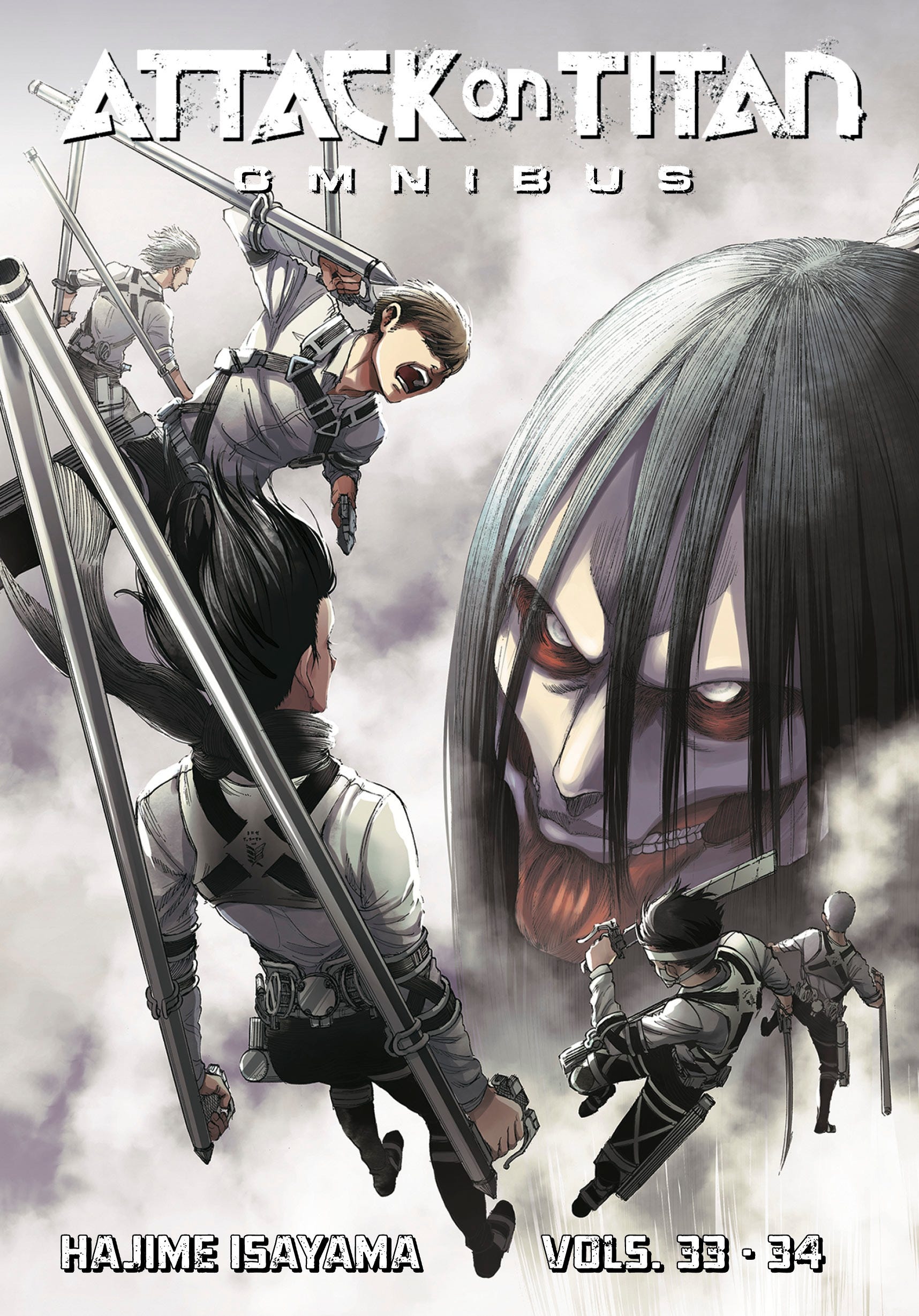
While I was writing the first half of Triverse, I was also mainlining Attack on Titan. The manga concluded just as I was starting to publish.
This combined with Naruto to upend many of my assumptions about story structure. Attack on Titan is extremely long and is restrictive about how much information it shares with the reader. There are layered mysteries at its core, and the reveal of each one recontextualises everything that’s come before. There isn’t a single twist here, but multiple revelations from start to finish that repeatedly force a rethinking of what the story is about. It’s challenging and frequently uncomfortable.
Specifically, there’s a time jump that is used to upend much of the status quo. The story turns out to be about something very different to what a reader might assume. There’s a boldness to the multiple rug pulls, but it all holds together because it certainly seems to have been planned out ahead of time.
The time jump at the end of season 3 of Triverse was inspired partly by reading Attack on Titan. It required confidence that readers would come along for the ride, despite the turbulence, and that the story would be better for it.
Transformers UK (1984-1992)
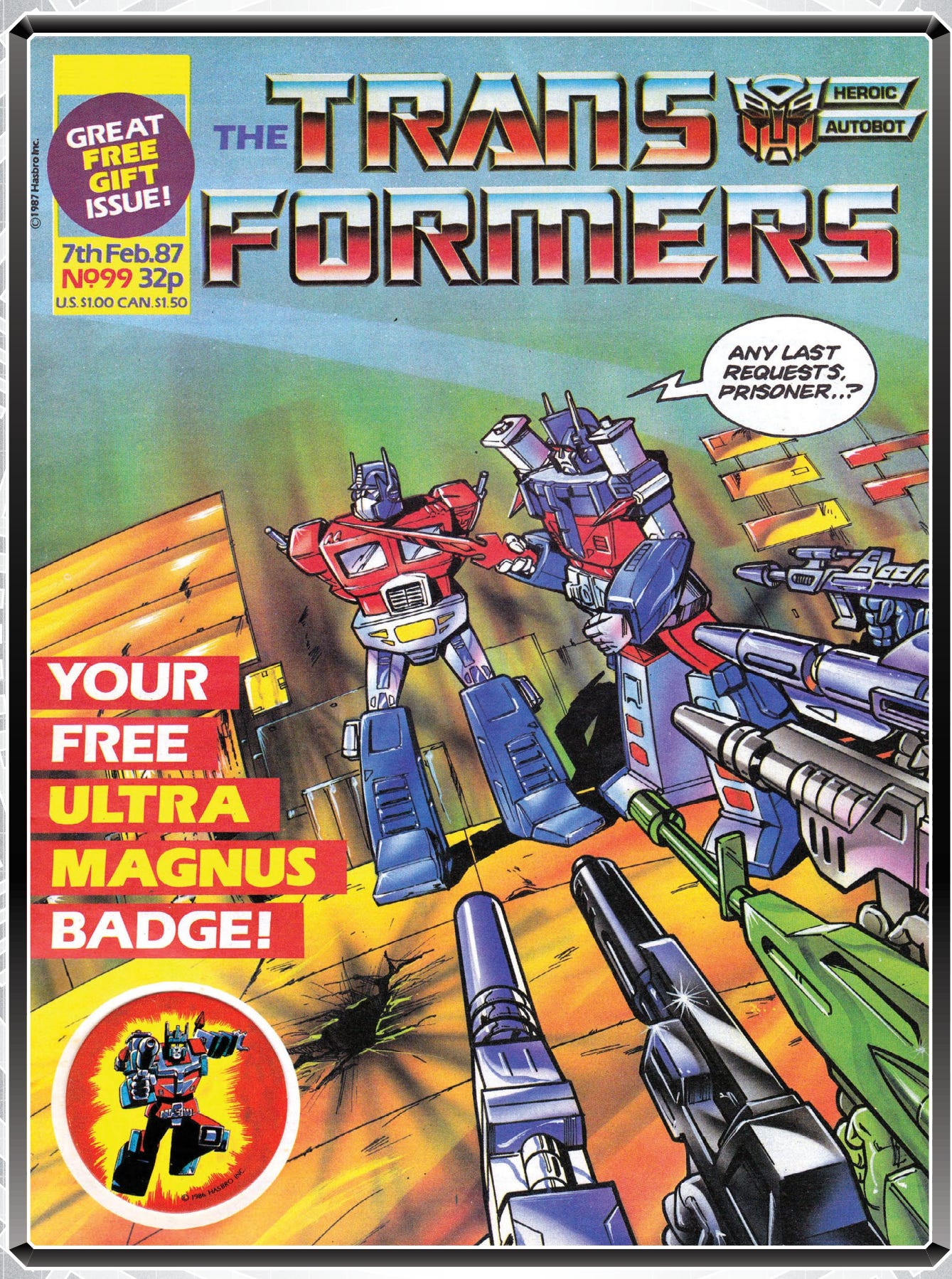
It would be remiss of me to not acknowledge Simon Furman’s work in the 1980s and early 1990s on the Transformers comic. Here’s a thing that existed solely to sell toys to impressionable young boys, a purely cynical capitalist exercise. It should have faded from memory like all the other commercials-in-disguise that I innocently enjoyed as a kid.
Readers in the UK got more issues than in the US, and most of them were written by Furman. For reasons unknown, he took he assignment extremely seriously, crafting a complex, layered story across many years with a huge cast. He touched upon life and death, the origins of the universe, religion, loyalty, war, sacrifice, friendship — all within the inherently silly context of robots that turned into cars and planes. And cassette players.
The cult classic 86 movie has a lot to do with Transformers still being a thing 40 years later; for me, though, it was Furman’s comics. They didn’t patronise the audience, instead choosing to challenge and provoke. Specific storylines and specific panels are still burned into my memory.
As is a required caveat these days, if your only experience of Transformers is via the abysmal Michael Bay live action movies, just bear in mind that the franchise was very different in the 1980s.
Here’s an important observation: the UK comic was my first proper encounter with long-form serial fiction. Everything else I was enjoying in the 80s was far more standalone, whether it be novels, films or television. The UK Transformers comic told a huge story across literal years, and that fired something in my brain: a spark of realisation: This is what I want to do!
SAGA (2012-)
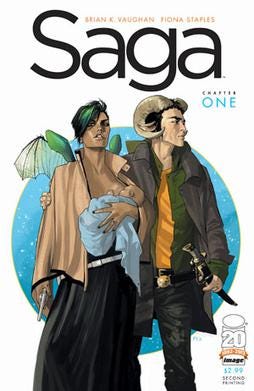
Brian K Vaughan has worked in serial storytelling for decades, across comics and TV. Picking a specific project is more-or-less impossible, but SAGA seems like a good candidate. It started in 2012, took a break in 2018, and resumed in 2022. My four and a half years on Triverse pale into insignificance compared to the time commitment from Vaughan and artist Fiona Staples.
SAGA, like Naruto, demonstrated to me that you can go bigger and more outrageous with stories — as long as you know why you’re doing so. My tendency, I think, is to go smaller, and hew close to what I consider ‘reality’. SAGA is a story that seems to have no rules, yet feels entirely internally coherent and consistent. As a piece of world building, it is audacious in the extreme.
BKV serialised another comic, Spectators, via his Substack newsletter. That ran for several years while I was writing Triverse and made for an interesting comparison: often an instalment of Spectators would be a single page, or even a single panel. It poked at what was reasonable to serialise in exciting ways. It’s also unflinching, as tends to be the case with BKV: it’s uncomfortable, difficult and challenging, complex in its themes. Whenever I worry about including a particular theme or story, I look to BKV and tend to find my courage. It’s a reminder to not always play it safe.
If you’re looking for a master of the serial form, who knows how to thread a long narrative while having individually satisfying episodes, all wrapped up in meaningful themes and beautiful characters, BKV’s work is essential.
Kieron Gillen (1975-)
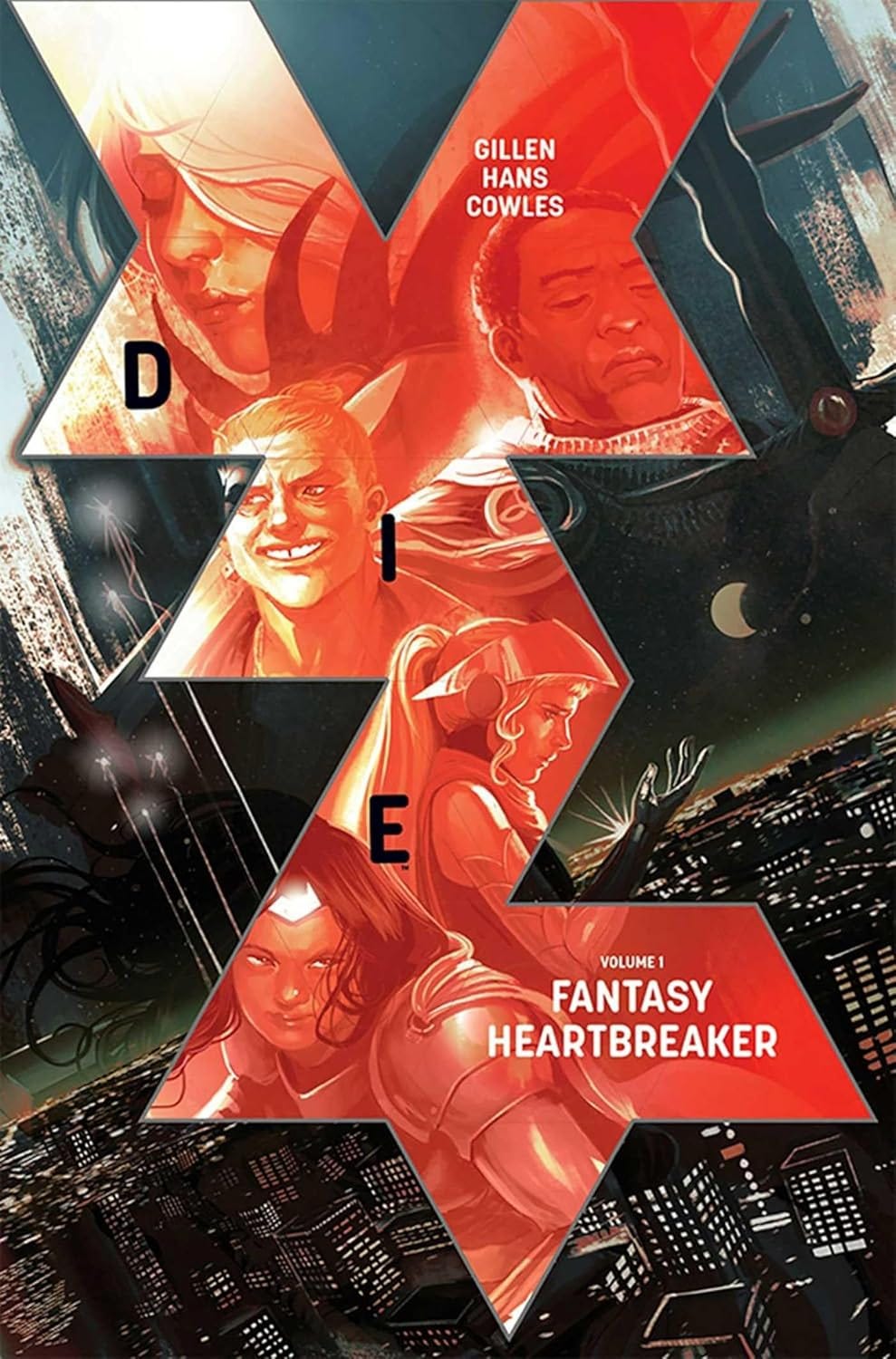
OK, Kieron Gillen is a person, not a comic. You’ve got me. But picking a specific comic from him is a fool’s errand.
There’s DIE, a meta comic about games and roleplaying that still manages to be about characters. There’s Wicked and the Divine, a pop-star-god-fantasy epic. There’s UBER, an earlier work that remains unfinished due to publisher rights daftness, which retells World War 2 on he premise that the Nazis acquired superpowers and does so via an almost documentarian detachment. More recently there’s The Power Fantasy, a sort of endlessly ironic take on geopolitics and social media-era narcissistic personalities. There are KG’s runs on various Marvel books, including a huge crossover Avengers vs X-Men vs Eternals corporate event that thanks to KG’s shepherding somehow managed to be one of my favourite comics of that year. There’s his early Young Avengers and Phonogram books, which were immediately something new and different.
It’s useful I think, to read people whom you know are significantly better writers than you are. They serve as an aspirational target, way off in the distance. Reading KG’s work improves my own, because I’m always striving to be that good. Whether I ever will be is irrelevant: it’s the attempt, the struggle, that matters. Again, here is a writer who excels in the serial form. There’s a meticulous density to Gillen’s stories, a journalistic or perhaps even academic desire to deconstruct, but he always finds a way to do so that is entertaining and rooted in character. That interweaving of intellectualism and pop is something I’m always trying to achieve.
I wrote more on DIE here:

There’s also a podcast interview I did with him years back:

I could keep going, but simply listing all the comics I’ve ever read would keep us here all day. Instead, I’ll park it there.
Thanks for reading.
Some bits and bobs that caught my eye recently:
Ireland is continuing and expanding its basic income for artists scheme. Fascinating stuff — I hope it results in Ireland being a world-leader in incredible, sustainable art.
Great podcast with Cory Doctorow from Brian Merchant about enshittification. I was given Cory’s new book for Christmas and am looking forward to diving in.
Substack released some nifty updates that provide more control over a publication’s appearance. Very welcome!
I can’t remember if I linked to my article on Wonder Man (which I liked very much). Just in case, here it is.
I nodded along vociferously with this lament for tech over on the Overkill newsletter.
Right, have a good week everyone. I’m working through post-Triverse plans while also enjoying some quiet time. I need a bit of a breather before diving into new projects, but something new and shiny will come along soon enough.
I was just thinking I should reread Gotham Central. I never expected to enjoy a series about the GCPD, especially one without Commissioner Gordon, but I was happy to be wrong.
The artist, Michael Lark, deserves a ton of credit for keeping all those non-super characters visually distinct and recognizable. His characters needed to "act," and they did.
I have thoughts, but today isn't one in which I can take the time to write them down.
I'll just digress into the "The Transformers: The Movie 40th Anniversary Apology Tour" for a moment. It's a funny bit of marketing, but if that movie HADN'T killed off Optimus Prime and dozens of other characters, we would'nt still talk about it. That added stakes to the franchise. And, of course, generated an actual emotional response from the audience beyond the vague "Yay!" that the good guys won another formula episode.