

Getting it completely wrong
Why you almost certainly shouldn't listen to me

While rummaging through my back catalogue last week, I stumbled upon an old post called Planning your story’s big finale. Allow me to indulge myself by quoting my own writing:
“Eighteen months in, I can see the end. It’s just peeking over the horizon, still a fair ways off but approaching with alarming rapidity. Which means I’m entering into a new phase: wrapping it all up. That process is what I’m talking about today.”
Such confidence! Marvel at the clarity of vision! I am an arrow loosed from the bow.
That post was published in May 2023. As some of you will already know, I didn’t finish publishing Tales from the Triverse until January 2026. We’re not talking about being a few months out here: that’s almost three years later! This is, of course, very silly and slightly embarrassing, and does call into question whether you should listen to anything I say.
You can read that old post here if you’re so inclined and fancy a laugh:

So why am I highlighting my extreme inability to estimate time? For starters, it highlights the fuzzy nature of serial fiction, especially if you’re writing and publishing as you go. Without a locked manuscript, the story is very much still in flux and susceptible to changes that cannot be predicted.
I could have wrapped up Triverse in my originally estimated time; probably around late-2023. I can’t see from here whether that would have made for a better or worse story, but it certainly would have been different. Characters never met, story paths never trod, themes never explored. Many of my favourite ideas in the back third of Triverse came about quite late in the day and weren’t part of the original outline - none of them would have made it onto the page if I’d forced myself to end it earlier.
Triverse was possibly a unique case, in that it leaned into an anthology structure and was far more episodic than anything I’d written previously. Theoretically, I could have continued writing largely standalone detective stories in that universe for as long as I wanted. Pulling the trigger to launch into the finale was a specific decision, one that I didn’t get to until early 2025.
I’m not entirely incompetent
I am capable of being more disciplined. My previous serial, No Adults Allowed, was conceived as a tight thirty chapters. So determined was I to stick to that structure that I numbered the chapters in reverse order, counting down to zero. That added sense of mystery, of what would happen at zero, required me to hit the chapter points precisely. It was a satisfying creative challenge.
So, yes, I am able to keep projects under control when I want to. But then there’s Triverse, which just wanted to keep going.
This brings me back to something discussed with S.E. Reid during part 3 of our Crafting serial fiction mini-series. It’s an obvious point to make, but if your weekly serial consists of thirty chapters that means it will take you thirty weeks to complete its run. That’s about seven months.
Maths.
The size and shape of your story translates into time in a much more direct way than if you’re working on a manuscript that nobody is going to see until it is done. Practically, this means you can scale the project appropriately to your own level of confidence. If it’s the first time you’ve serialised a story, perhaps think twice about committing to a tale that will be running for multiple years.
SE Reid has published multiple complete serials in the time I published Tales from the Triverse, because she keeps to around twenty chapters per story. I am envious. My brain instead trends towards longer, larger stories. As a reader and viewer I’ve always enjoyed a dose of the epic, and draw inspiration from television structures as much as from novels.
How to keep going
If my advice here is to plan carefully and only commit to something if you know you can handle it, what then if you entirely miscalculate? Case in point being me with Triverse. That’s when the writing turns into a marathon, and a test of stamina. There were points during Triverse‘s run when I wasn’t entirely certain I was going to make it: my brain was overloaded, sagging under the sheer weight of all the characters and plot threads and thematic links. Locations and names and backstory and lore buzzing around my mind like that scene in the Matrix when Neo first sees in code - except it’s all gibberish. Keeping track of everything was challenge enough, and that was before having to then write actual prose that wasn’t terrible.
Thinking back, here are some things that got me through:
Something I introduced right at the beginning of Triverse were ‘bonus chapters’. These were outside of the main story and a way to have a bit of fun by dropping in extra background details. For example, a newspaper front page, or a press release, or an academic paper. When I hit the long middle of the book, having the option of switching to a bonus chapter helped to keep the writing fresh. It would also give me extra time to work out where the main story was going, which proved invaluable. And while a bonus chapter isn’t exactly ‘free’, it tends to come together quicker than writing 1,500 words.
Choosing the narrative shape of your story is a big decision, before you even start writing or publishing. How are you going to tell it, structurally? What is the point of view? I find first person easier to write, generally, but only for shorter stories. Maintaining a first person, fixed perspective narrator for a longer story is challenging, in large part because it limits your options. With Triverse I knew it would be an ensemble piece, with a larger cast and a roving perspective that would switch character mid-chapter as and when the story demanded. This proved to be hugely helpful during the long, drawn-out middle of the serial’s run, as it meant I could always refresh my brain and the story by switching POV. Moving the spotlight around would immediately bring new ideas, even within the same scene.
I exist somewhere on the middle of the plan/no plan spectrum. There are key plot events that I know are coming, but how I get to them is fuzzy. A destination, then, but multiple routes. More on my process here. Knowing what’s coming up, even loosely, can really help. Struggling to write the current chapter? Well, remember that big death that’s coming up! Or the major plot twist! You know it’s coming, but the readers don’t. What glee. What mischievous fun there is up ahead. Use that anticipation to get through the tricky bits, because it’s going to get fun soon enough.
This won’t work for everyone, and doesn’t always work for me, but sometimes picking the right tune can make all the difference. Let’s say I’m struggling to settle into writing a particularly grim chapter in which my detectives are investigating a gruesome murder scene. Perhaps I’ve spent all day in the sunshine, or have just got back from playing squash and murder is far from my mind (unlike normally, mwu-ahaha). Well, sometimes all you gotta do is put Howard Shore’s score for the film Seven on and the ol’ brain clicks right into gear. I tend to have a vague playlist of albums to suit different tones: the tension music, the action music, the comedy music, the romance music and so on. Different albums cycle through, but there’s always something to draw upon if I need some aural stimulation.
Here’s a personal grumble I often wheel out and some of you will have heard before: the mantra of you must write every day does not work for me. To be clear, I have no problem with others doing it, and if it works for you then that’s all good. I struggle to write every day, because *waves hands at life*, but as I’ve built a solid writing habit over a decade of serialising my work I’ve come to realise that I do my best work when I don’t write every day. Gaps in-between writing sessions are now a deliberate part of my process. After I publish a new chapter on a Friday, I don’t even think about the serial again for 24 hours. Then, on Sunday, new ideas are percolating through my brain whether I like it or not, but even then I don’t tend to start putting pen to paper. Those spaces tend to be where I have my best ideas. If I were to fill them up with active writing, I doubt it would improve the final result. This will be different for everyone, of course, but if you’re finding yourself increasingly stressed at trying to get back to the page on a daily basis...cut yourself some slack.
You probably have some readers. Perhaps there’s just one. Maybe there’s more. Recognise them, admit to your have self that they’re there, that other humans on the planet for some weird reason decided to read your stuff. Harness it into motivation to keep going. They might be quiet, perhaps they don’t actively comment, but they’re there, and they are waiting for the next chapter. Get to it. At least, that’s what I’d tell myself when I was rebelling against my own story.
This one probably doesn’t need to be here, if you’re reading my newsletter, but anyway: try serial publishing. Given the way my brain works (or doesn’t), if I’d been writing my manuscripts quietly by myself, locked away on my hard drive or in a drawer, with nobody in the world any the wiser - I’m certain I would never have finished a single project. That’s my weakness. If you can get through a manuscript consistently each time from the comfort of your own brain, then huge respect. Obviously lots of people can, because that’s why there are a fair few books in the world. But this newsletter was set up largely for everyone else. I stumbled into serialising my stories, not realising it would turn out to be a massive productivity hack for my brain. After thirty years of faffing about without making progress as a writer, since committing to serials I’ve been writing consistently for over ten years. Ultimately, it’s writing and publishing in serial form that keeps me coming back.
Right, I hope some of those tips help if you find yourself stuck in the long middle, with the rest of your book stretching off into the infinite far distance.
How about you? How do you keep writing when the ending refuses to arrive?
Meanwhile.
Last week I went to the Substack Fête in London. It took place on the lawn at Lincoln’s Inn, which had real Hogwarts vibes:


Substack events are extremely odd affairs. The only unifying element is that everyone in attendance uses Substack for something. You’ll bump into food writers, politics writers (across the spectrum), tech writers, sports writers, documentary filmmakers, influencers,1 TV presenters, journalists, fiction writers, travel writers. It’s conversational whiplash, over and over again, and it’s quietly brilliant.
I’m not sure what to think about the presence of politicians and culture writers with whom I strongly disagree. Being in the same space as deeply unpleasant people feels personally compromising, but anything which facilitates civil conversation and debate is perhaps a useful pushback against the toxic discourse of the online media ecosystem. A way through, perhaps. Conversation is generally better than bile and hatred, I think?
Of course, the vast majority of the guests are normal, lovely people. Well, not necessarily normal. I’d barely been there five minutes when Munya Chuwawa wandered in.

Recognising that Munya is way too cool for me to be in close proximity to, I quickly scarpered off in the opposite direction across the lawn only to encounter:

Brian Cox off of the telly. Not only cool, but evidently highly qualified at talking about physics and stuff.
All photos of famous people are by @jedcullenphoto.
Caught in a pincer movement, I desperately tried to locate someone I didn’t already recognise. Fortunately, I was able to bump into an old friend:

Cake. You can’t go wrong with cake.
The cakes were provided by various Substack writers who write about baking, which was a nice touch.
I ended up speaking with lots of fascinating people, including Substack employees. You can be sure I spent some time talking about the fiction community and how a couple of key features would go a long way. You know the drill:

OK, here’s something from the day job, in the form of an academic (but very approachable!) seminar on how LLMs have affected book releases. It’s full of fun and interesting analysis, though opens up more questions than it answers:

Last week I was thinking about the UK’s proposed social media ban for young people, which prompted a lot of responses, including this succinct observation from Naomi Alderman:
There’s another aspect, as well, which has been bothering me: how many kids are learning creative (and business) skills online, whether it’s publishing their writing, broadcasting on Twitch, distributing their filmmaking on YouTube? The new rules could prevent all of that creative expression. Not to mention how the methods for assessing age tend to result in large tech companies holding even more data about us all — there’s an interesting piece over on the Guardian about that.
I write and publish online, as do many of you, so, regardless of our individual politics, this stuff is worth keeping an eye on. Even the best intentioned legislation can have unintended consequences, especially around tech where the politicians rarely seem to have a good handle on how it all works.
Anyway.
Thanks for reading, as ever! And for those of you who enjoyed Tales from the Triverse (including its overdue ending…), my new serial will be kicking off very soon. It’s been too long! Can’t wait to get back to the weekly chapter releases:
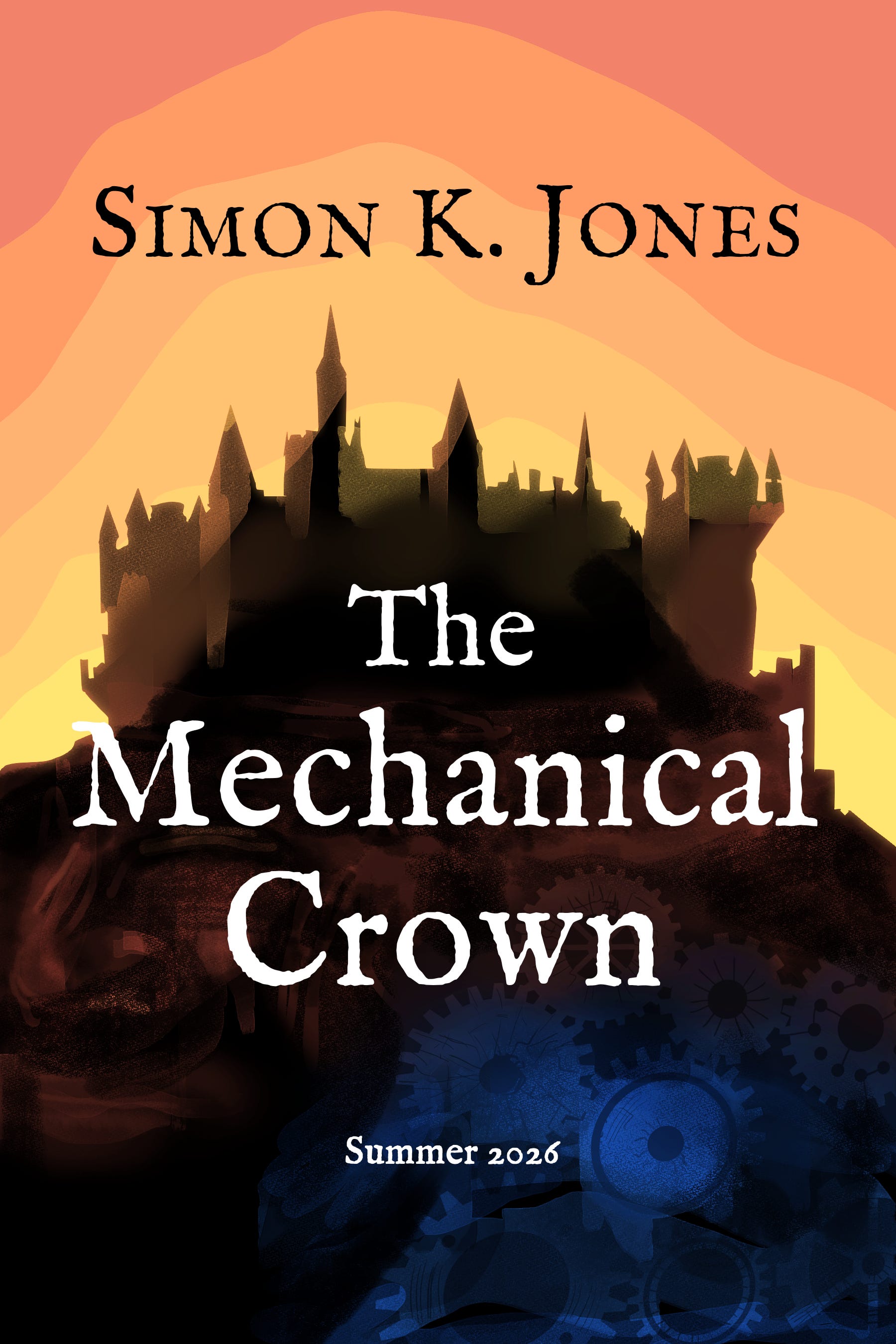
Still not sure what these are.
My brand of that is telling my editor, “So that novel that was definitely a standalone … I think it’s actually a trilogy” and, “How would you feel about a spinoff novella? I seem to be writing it …”
Anyway, I don’t think getting it wrong is a bad thing. Stories are alive, after all.
I don't write serial fiction, but I find your newsletter is supremely helpful for writing serial *anything*. I came to you for advice when considering serializing my sequel to my memoir, and now I've released Chapter 6! As you said, committing to the serial format got me off my figurative duff of thinking about that completed [albeit VERY bad] first draft of 3 years ago and actually publishing it. Now I'm excited about each week and polishing each new chapter. I was definitely NOT excited about polishing that entire book. There's something to be said for baby steps and that sense of accomplishment. (P.S. - your sense of humor also keeps me coming back.)